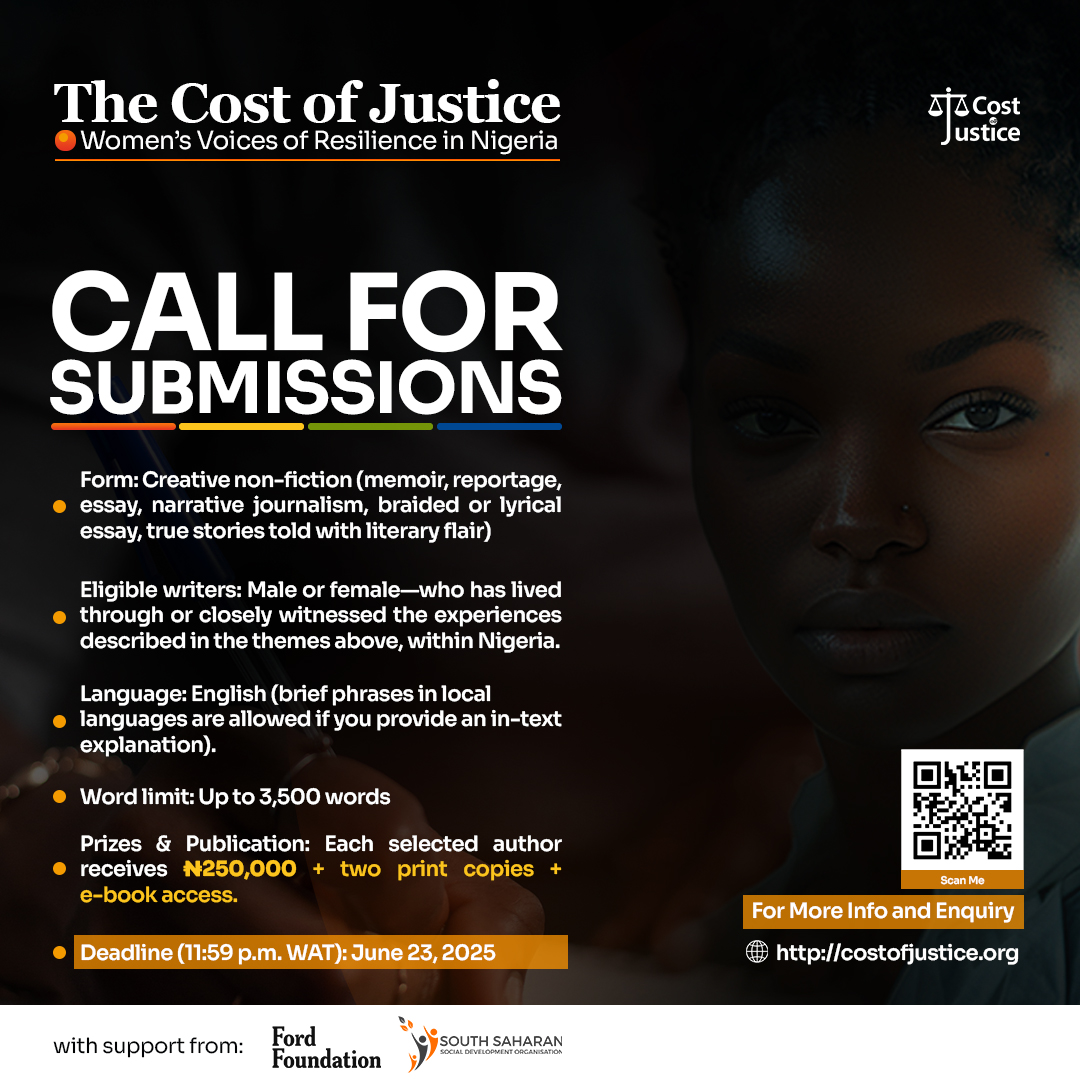
The Cost of Justice: An Anthology of Women’s Voices and Resilience in Nigeria is a storytelling and advocacy project that amplifies the lived experiences of women confronting gender-based violence (GBV) and harmful traditional practices (HTPs) across Nigeria.
Despite legal protections, many survivors face steep emotional, financial, and social costs in their pursuit of justice. This anthology brings together powerful creative nonfiction under three core themes:
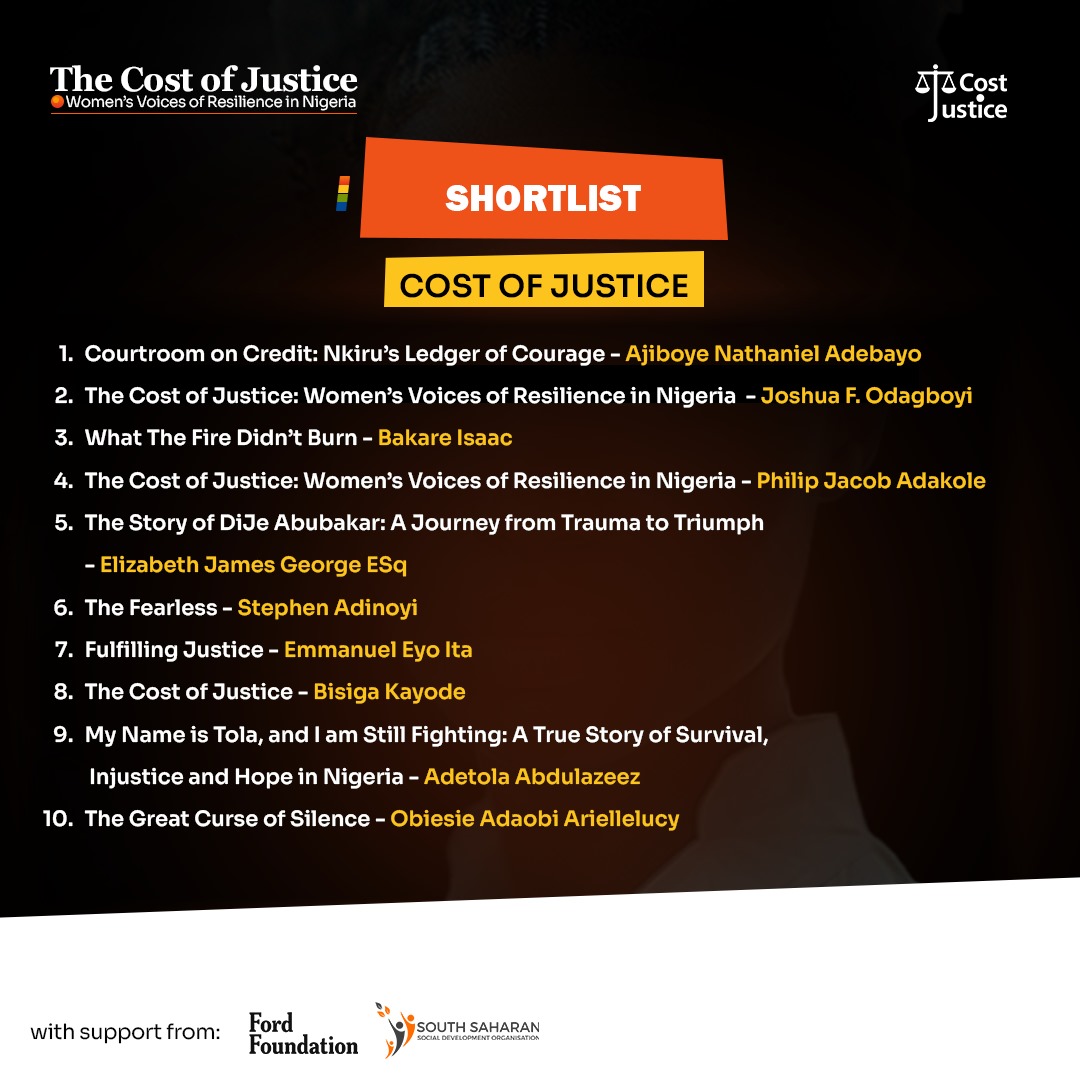
– The Cost of Justice
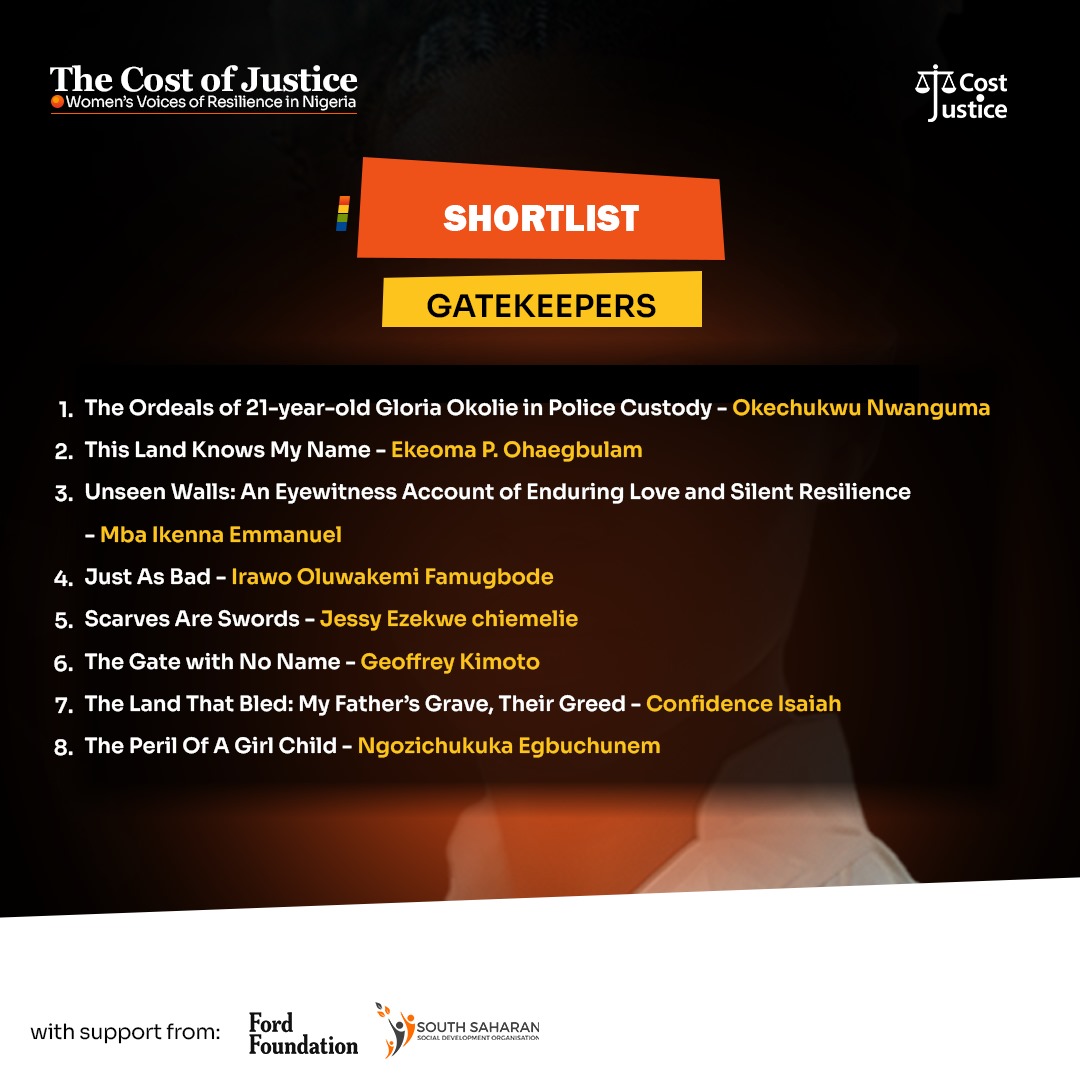
– The Gatekeepers
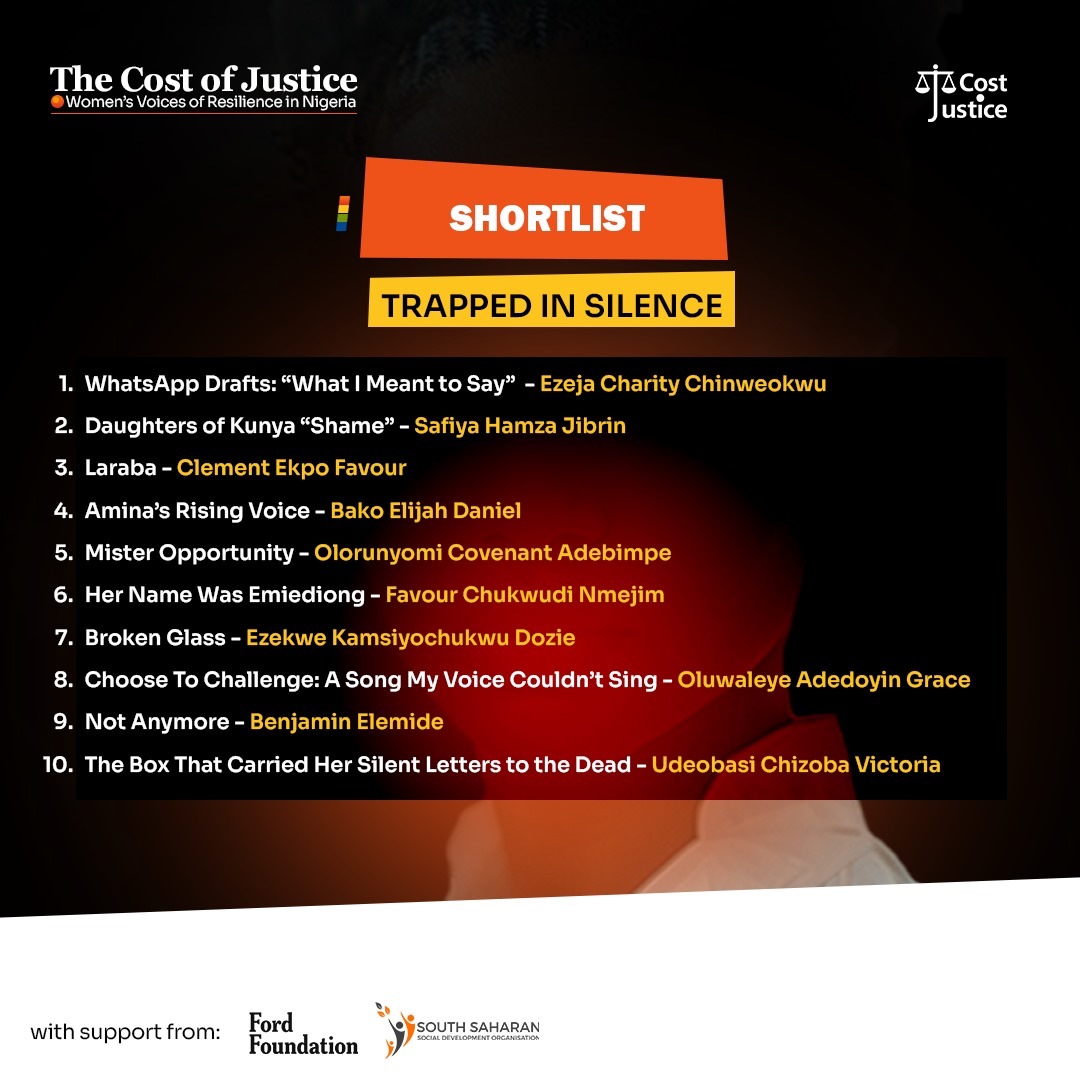
– Trapped in Silence
The project seeks to document personal narratives from survivors, advocates, and witnesses. Our goal is to spark community dialogue, challenge entrenched norms, and drive policy reform by using storytelling as a tool for change.
We envision a Nigeria where women and girls live free from violence, stigma, and discrimination, supported by strong legal systems and empathetic communities. Through this anthology, we aim to move beyond data to the real human stories that can inspire collective action.
The Cost of Justice Anthology is a South Saharan Social Development Organisation initiative, supported by the Ford Foundation.

The monetary, emotional, and social price women pay when they pursue redress.

People or institutions (family elders, police, courts, religious bodies, health services, employers, etc.) that enable or excuse harmful practices.

The weight of stigma, shame, and community pressure that deters survivors from speaking out.
Track a survivor’s spending log: police “station fees,” hospital bills, endless transport to city courts. Show how each payment forces a household trade‑off.
Show how emotional costs outweigh cash: social‑media trolling, church whispers, family shunning. End on a ledger of invisible debts and unexpected dividends.
Narrate a five‑year quest for judgement, told through a stack of court adjournment slips. Each slip cues what was lost that season—job, fiancé, mental health.
A police sergeant refuses to record rape reports unless a fee is paid. Detail one night’s queue of women, then flip to the sergeant’s private rationale.
A rural midwife secretly performs FGM under clan pressure while publicly denouncing it. Show the tug‑of‑war between duty and survival.
After her husband’s death, a widow meets three gatekeepers: village chief, land‑registry clerk, brother‑in‑law. Each checkpoint tests her claim to farmland.
At a family meeting, proverbs are wielded to suppress a niece’s assault story—until an ally translates each proverb into plain speech.
A young woman records voice notes she never sends. Build the narrative through these drafts, revealing why each confession stalls—family honor, bride‑price, fear.
A community radio show invites a survivor; she backs out last minute. The host fills the hour with callers’ mixed reactions, exposing communal silence.
Submissions begin. Writers are invited to share powerful, true stories centered on justice, silence, and resilience.
Final day to submit entries. All manuscripts must be received by 11:59 p.m. WAT.
Selected entries move to the final review stage. Authors will be notified and begin editorial engagement.
The final list of published contributors is revealed. Theme awardees are also announced.
A celebratory reading and book launch in Abuja and/or Lagos. Author spotlights, and community dialogue.